In summer 2025, I went through one of the worst moments of my life. And still, I was quite optimistic that a time of healing was coming. How wrong I was.
Some wounds do not heal, some scars do not fade. And the time of healing morphed into a time of struggle, one that has no clear end in sight. A casualty of this ongoing fight is ᚼᛁᛆᚱᛐᛆᚿᛋ, both as a music project and as a broader narrative endeavour. (Stars Over Lost Havens too, but the pacing of that project was intended to be erratic right from the start. The journey will continue, the story will be told. Under what timeline, only the goddess ☰☰☲☶ knows).
In this struggle and ensuing chaos, I cannot help but think I have failed one artist in particular, whom I contacted full of enthusiasm about a journal
I like to start the journals on artists I love from the perspective of my first encounter with them. Those memories are full of enthusiasm and childlike exploration, so it's understandable that I don't feel like going there at the moment. However, there is a Umbría album that feels very relevant for me in these last months.
Homecomer dates back to 2023, and it is a release that also sparks some wonderful memories. I recall watching remotely the recorded performance for Mazmorra Arcana with excitement and anticipation for the release of the new album.
But what brings me back to Homecomer now is the journey of the unnamed traveller, described in the lyrics of the songs. I can't help but feel close to her: after an implied time spent far from home, she longs to return to her place, a place of beauty and belonging. But the journey is not easy. Every obstacle seems minor, though, until the traveller discovers of the Legend of the Forest Bearer, a curse that is now rooted deep into her. And this is exactly how I feel: I have always known that my road held some tough challenges in the future, but now the future has become the present, and I need to face a curse of my own.
The narrative interwoven with the songs is not a unique feature of Homecoming, but is a constant in Umbría's latest releases, and it's one of the aspects that make them magical. But I have talked too much about myself, and have actually said nothing yet of Umbría's music. There are two qualities that come to my mind every time I think about it. The first is the astounding and intricate orchestrations, that intertwine so many instruments in a way that feels organic like a music high relief.
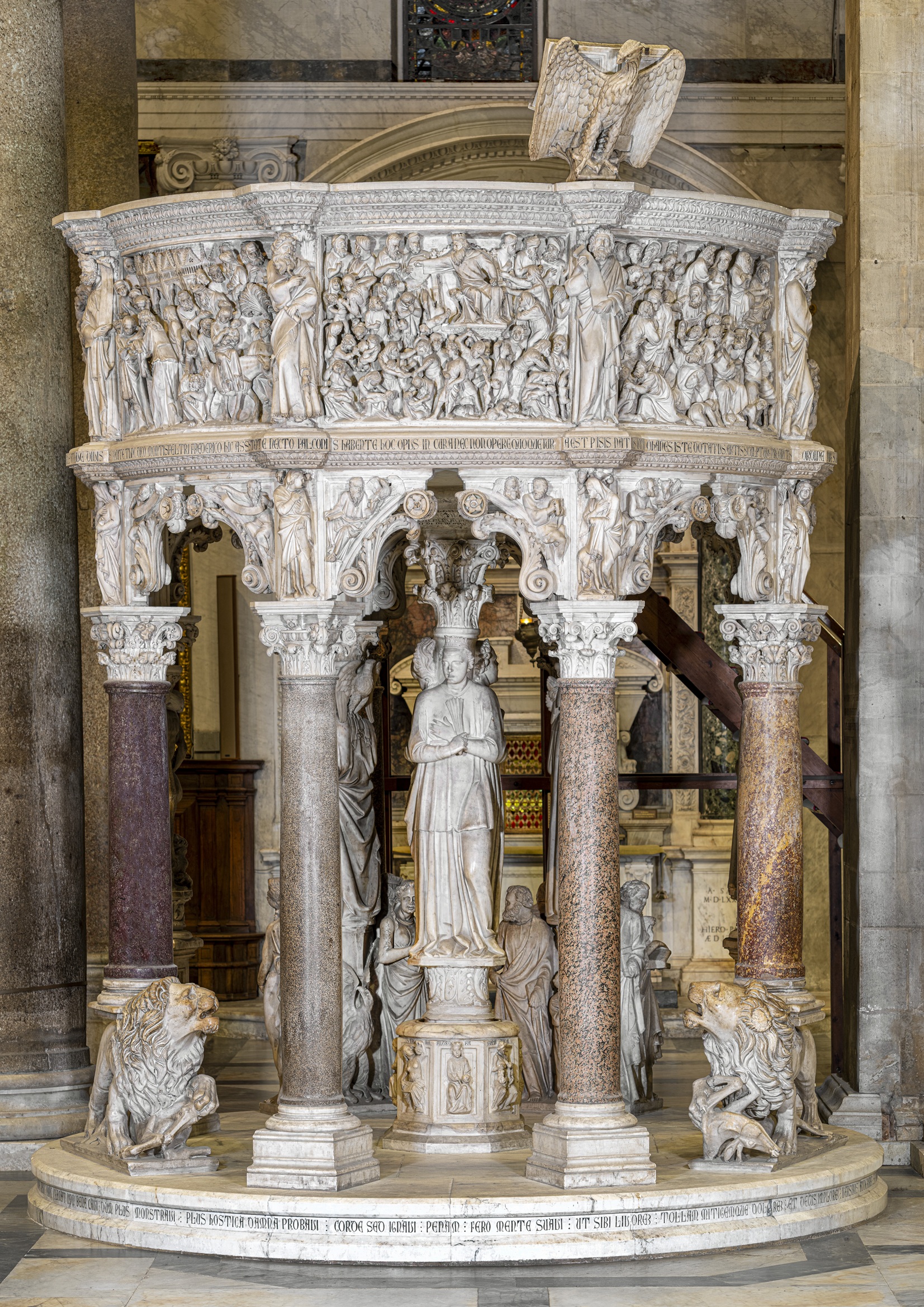
Besides, the amazing orchestrations, Umbría's music has a unique fingerprint that I couldn't place until I finally talked to Umbría himself a while ago. It turns out he is a student of theorbo, a kind of lute of the late XVI Century. And the Renaissance music influences, transfigured by Umbría's own approach to Dungeon Synth, are what make his music stand out. Indeed, from his first demos to his latest offerings there is a constant undercurrent that evolves and is ever-changing, but is also uniquely recognisable and uniquely coherent.
Mentioning the last two releases, The Rime Pathways and Frost and Wonder, brings me back to the splendid union of music and narration in Umbría. These releases describe a journey through a norhtern land covered in snow. It is a ritual journey, but also a journey of hope, of bringing light when the dark seems to devour everything.
A message I surely can't hear enough of.
And I also love it that there is a Krampus in there, since it brings me back to when I lived in the city where I met my wife, and also where I first met krampuses
And, finally, hope and light are what carry me back to the release that started my journey with Umbría.
Right from the start, The Entombed Wizard is an album that took hold of my heart and never let go. The initial astounding guitar arpeggio (that makes a lot of sense in light of Umbría's theorbo studies), the amazing synth sounds and their orchestration, the spooky tale told by the fireplace... It is such an iconic release that to me embodies the quintessential Umbría. I wish I had more words to describe it, but let me just say: go and listen to it, let yourself be carried away by the music and the story on one cosy night. Bonus points if you are under a warm blanket with your favourite hot beverage.
The Entombed Wizard is so dear to me also because it features one of my favourite songs ever.
I am a firm believer in the healing power of creativity, and I have already written a journal on healing music back in summer 2025. Healing Alchemy is one of the songs that cemented this belief. Everything about it, the sounds, the composition, the mood, and the final solo that comes as an unexpected gift, contributes to create this wonderful healing spell. If you don't have time for the whole The Entombed Wizard, sparing four minutes for The Healing Alchemy is the next best thing.
Also, it shouldn't be surprising that I am drawn to the themes of death, doom, and healing that seem to be ever present in Umbría's music. Even unhealing wounds can be treated, pain can be comforted. And there's beauty at the end of the road, either in the form of some healing magic or of a wonderful, magical forest that grows as a celebration of a life well lived.
Speaking of celebrations, a testament to Umbría's ability as a storyteller through both music and words is The Flames Witnessed at Temperance, a charming intro-level RPG inspired by The Sleeping Wizard written by D. D. Gant.
It is great how Gant openly recognises Umbría's inspiration and also encourages to use The Sleeping Wizard as a soundtrack for the game sessions. My roleplaying days are sadly behind me, but the adventure is great in so many ways. It gives me the same tale-told-by-the-fireplace vibes of the music, and it is full of charming details. Exactly like Umbría's music, that with each new listen reveals more and more secrets and gifts.
In 2024 I had the pleasure of meeting Umbría in an online Dungeon Synth community. It was a pleasure getting to know him and, in time, we started to chat every now and then. So it was natural that, while I was preparing this journal, I asked him if he wanted to talk a bit about music on this page as well. Here are some extracts from our conversations.
ᚼᛁᛆᚱᛐᛆᚿᛋ: I often speak of music as a ``journey''. And, as I have hinted above, yours seems far from being typical. Would you like to share the parts of your ``music journey'' that feel more important to you?
Umbría: I started learning music around 8, when my parents signed me up for classical guitar at my home town conservatory. I enjoyed it to some point, but ended up leaving it around at 16 to focus on my engineering studies. Since then I've been a regular metal enjoyer, starting at Heavy and Power Metal (typical after studing classical music) and getting pregressively into darker territories. During this time I would try to learn some electric guitar, but I never got along very well with picks. It was much later, when I started listening to Black Metal, that I found about the existence of Dungeon Synth, back in 2017. Curiously enough, the rather Neoclassical and Baroque projects (Ménestrel, Chaucerian Myth, Scriptor Hiberniae, The Castle of Otranto) particularly called my attention and renewed my interest in classical and early music. And it was this incentive what brought me to try myself. By the time I released my first demo, I decided I would retrieve my classical guitar and prepare the exams to get back into the conservatory.
ᚼᛁᛆᚱᛐᛆᚿᛋ: So your demo was already influenced by your previous knowledge of classical guitar, right? That's not surprising, I have to add ^^" As I've said countless times (forgive me if I'm getting boring or annoying), it gives a very unique identity to your music, right from the first notes. I really appreciate this Umbría DNA.
Umbría: I think, yeah! But I wouldn't personally think of it as if it was influenced by technical knowledge about harmony or composition, but rather as being somehow familiar with the soundscape of ``general classical music''. That demo was entirely composed by ear, but I'd say it had a lot of influence of choral and romantic music I would listen to by that time.
ᚼᛁᛆᚱᛐᛆᚿᛋ: That's quite impressive, I've always admired people able to compose just by ear. Most of the time I need to work with scales, chords... otherwise I feel lost and can't do anything meaningful. Even though Dungeon Synth is helping me developing a better ear and to grasp a little bit more intuitively some music ideas that previously I could only work out with a score or MIDI file. After starting Umbría and picking up classical guitar again, when you did realise you wanted to go beyond guitars and pick up the theorbo?
Umbría: Well, my return to classical music came hand in hand with a renewed fascination for fantasy and early times beyond the Classical period. Just as surfing blogs and bandcamp collections in search of hidden, underground gems from the Dungeon Synth scene, early music became the dark, cryptic, not that intuitive but intriguing side of the spectrum we call ``Classical music''. And being a classical guitar student, the imposing size and deep sound of the theorbo seemed as the perfect follow up.
ᚼᛁᛆᚱᛐᛆᚿᛋ: In your early releases I see some recurring motifs, such as The Trail of the Infants/Children of the Forest, or The Sleeping Wizard/The Entombed Wizard (for a long time I always confused the two, it was embarrassing XD).
If I'm not hallucinating these motifs, can I ask you about their significance or interest they have for you?
Umbría: There's no relationship between the infants and the children tracks, and these are actually influenced by vastly different periods: the Trail of the Infants would be an early exploration of minimalistic, mysterious atmospheres, strongly linked to loneliness and explorations of past secrets. You can find similar sounds (or intentions) in tracks as Etheral Presence. By this time, a strong Dungeon Synth influence was Ephemeral Landscapes. On the other hand, Children of the Forest plunges into a rather magical, emotional and much more dramatic approach of the project.
Both The Sleeping and the Entombed Widards has much more in common. In both cases, the motif relates to time, rest and the state of hibernation; in one case is cyclical (The Sleeping Wizard), in the other is permanent (The Entombed Wizard).
ᚼᛁᛆᚱᛐᛆᚿᛋ , February-March 2025